About
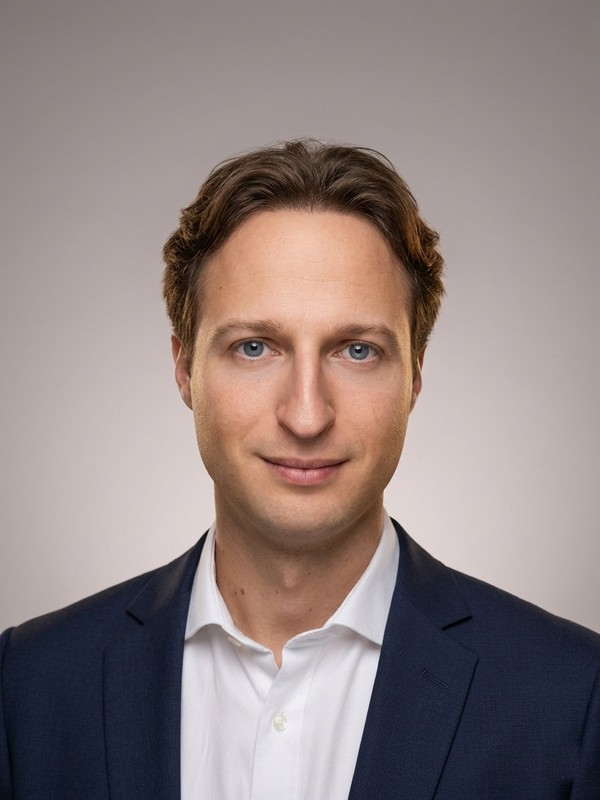
Carlo Hofer is a quantitative political scientist and Postdoctoral Research Associate at Queen Mary University of London, working with Prof. Maria Grasso on the Horizon Europe project DEMETRA on deliberative policy-making for sustainable food systems, a seven-country, eleven-institution consortium running 2024–2027. He holds a PhD in Politics and International Studies from the University of Warwick (2026), an MSc in Management from Ca’ Foscari University of Venice, and a BSc in Management & Technology (Computer Science) from the Technical University of Munich.
His research examines how the structures that surround people - online information environments on one hand, residential neighbourhoods on the other - condition political attitudes during periods of democratic stress. He works with causal-inference designs applied to panel data and survey experiments, complemented by geospatial analysis at fine spatial scales.
Doctoral research
Carlo’s PhD, supervised by Prof. Vincenzo Bove and Dr Andreas Murr, examined how online media environments and residential neighbourhoods shape political attitudes in the UK. Drawing on eleven waves of the British Election Study Internet Panel (over 100,000 observations), it combines within-person fixed-effects models, an instrumental-variables design, cross-lagged panel models, and fine-grained measures of neighbourhood segregation. The viva was held on 31 March 2026, with Prof. Peter Thisted Dinesen (University of Copenhagen) and Prof. Özlem Atikcan (University of Warwick) as examiners; the outcome was a pass with no corrections.
Research interests
Affective polarisation · Immigration attitudes · Media exposure and political behaviour · Residential segregation and contextual effects · Deliberative democracy · Causal inference with panel data · Survey experiments · Geospatial methods · Climate change attitudes · Political humour · Measurement error and data provenance · Asset-level ownership data
Current research
- DEMETRA (Horizon Europe). Comparative study of deliberative participatory processes on sustainable food systems across seven European countries, with responsibilities spanning consortium-wide coordination, the project’s ethics governance, qualitative field research, and the project’s policy briefs. The first two, Citizens as Partners in Food System Transformation and Beyond Pilots: Building Durable Governance Frameworks for Urban Food Systems, were published in 2026.
- From the PhD. Two papers in preparation: one on online political attention and partisan affect, and one on neighbourhood composition, segregation and attitudes to immigration.
- Political humour (ESRC). A series of co-authored projects on humorous political communication: climate change attitudes, intergroup affective polarisation, and intergenerational hostility.
- Quantitative investment research. An ownership graph linking listed companies to the physical assets they own, built from public data and published with its code before any analysis, and a measurement note on how the source database changes between its own releases. Write-ups and code under Projects.
For a full list of work, see Publications, Projects and CV.